Innovation by MIXACO: The Geometry Behind Mixing Performance
Why the right mixing tool is key to matrial flow, energy input and reproducible performance.
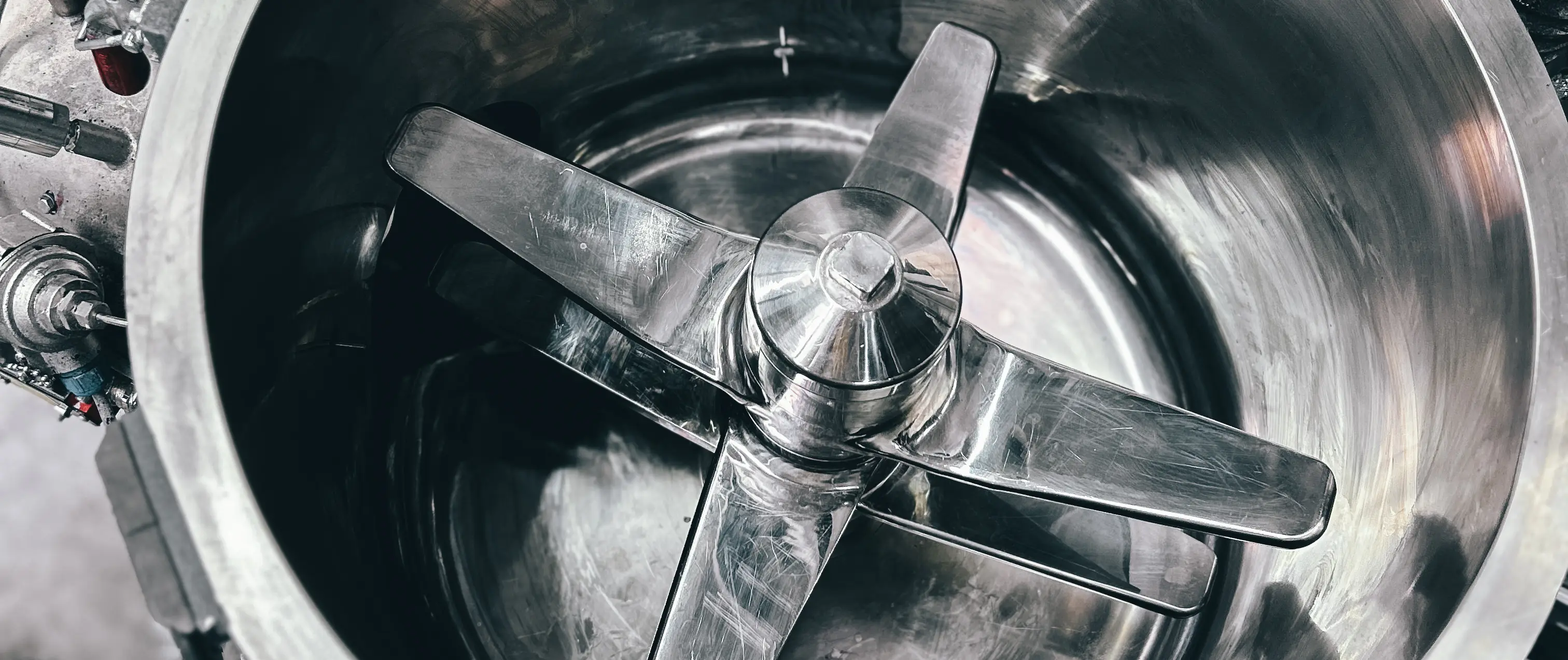
A mixing tool is much more than a rotating component inside the mixer. Its geometry determines how the material moves, where mechanical energy is introduced and how effectively every part of the batch is incorporated into the mixing process.
At MIXACO, tool geometries are developed around the specific mixing task. Depending on the application, the objective can be gentle homogenization, intensive dispersion, deagglomeration, controlled shear or efficient heat transfer.
Tool Geometry Makes the Difference – Engineering the Mixing Process
The mixing tool is the primary interface through which mechanical energy is transferred from the drive system into the product.
Its geometry – diameter, blade angle, blade width, number of tool levels, radial position and clearance to the vessel wall and bottom – directly influences:
- Tip speed [m/s]
- Specific energy input [kWh/kg]
- Power density [kW/m³]
- Shear rate and shear intensity
- Axial and radial product circulation
- Particle acceleration and collision frequency
- Deagglomeration efficiency
- Heat generation and heat-transfer rate
- Mixing time and batch homogeneity
This is why MIXACO develops mixer geometry, tool configuration and process parameters as one integrated system, rather than considering the mixing tool as an independent component.
Key Parameters and how they Influence the Mixing Process
Peripheral / Tip Speed
v=πDn/60
where D is tool diameter [m] and n is rotational speed [rpm].
This immediately demonstrates why RPM alone is not a meaningful parameter when comparing different mixer sizes. A 200 mm tool and an 800 mm tool operating at the same RPM generate completely different peripheral velocities and therefore completely different mechanical interaction with the product.
Specific Energy Input
Especific=mP⋅t
This links motor power, processing time and batch mass and provides a much more useful indication of the actual energy introduced into the material.
Power Density
PV=VP
Power density becomes particularly relevant when scaling a process from laboratory to production equipment.
MIXACO does not simply scale RPM geometrically. Tool diameter, tip speed, installed power, filling level, bulk density and product behavior must be evaluated together to reproduce the required mixing mechanism.
Material Properties →
Material / Process Parameter
Particle size [µm]
Bulk density [kg/L]
Batch mass [kg]
Filling level [%]
Tool diameter [mm]
Rotation speed [rpm]
Tip speed [m/s]
Motor power [kW]
Specific energy [kWh/kg]
Product temperature [°C]
Mixing time [s/min]
Tool Geometry
Influence on Tool Design
Dispersion and deagglomeration requirement
Torque, power demand and circulation behavior
Required energy input
Product circulation and active mixing volume
Tip speed and swept area
Product acceleration
Shear and dispersion intensity
Available mechanical energy
Process intensity
Thermal process control
Productivity and total energy input
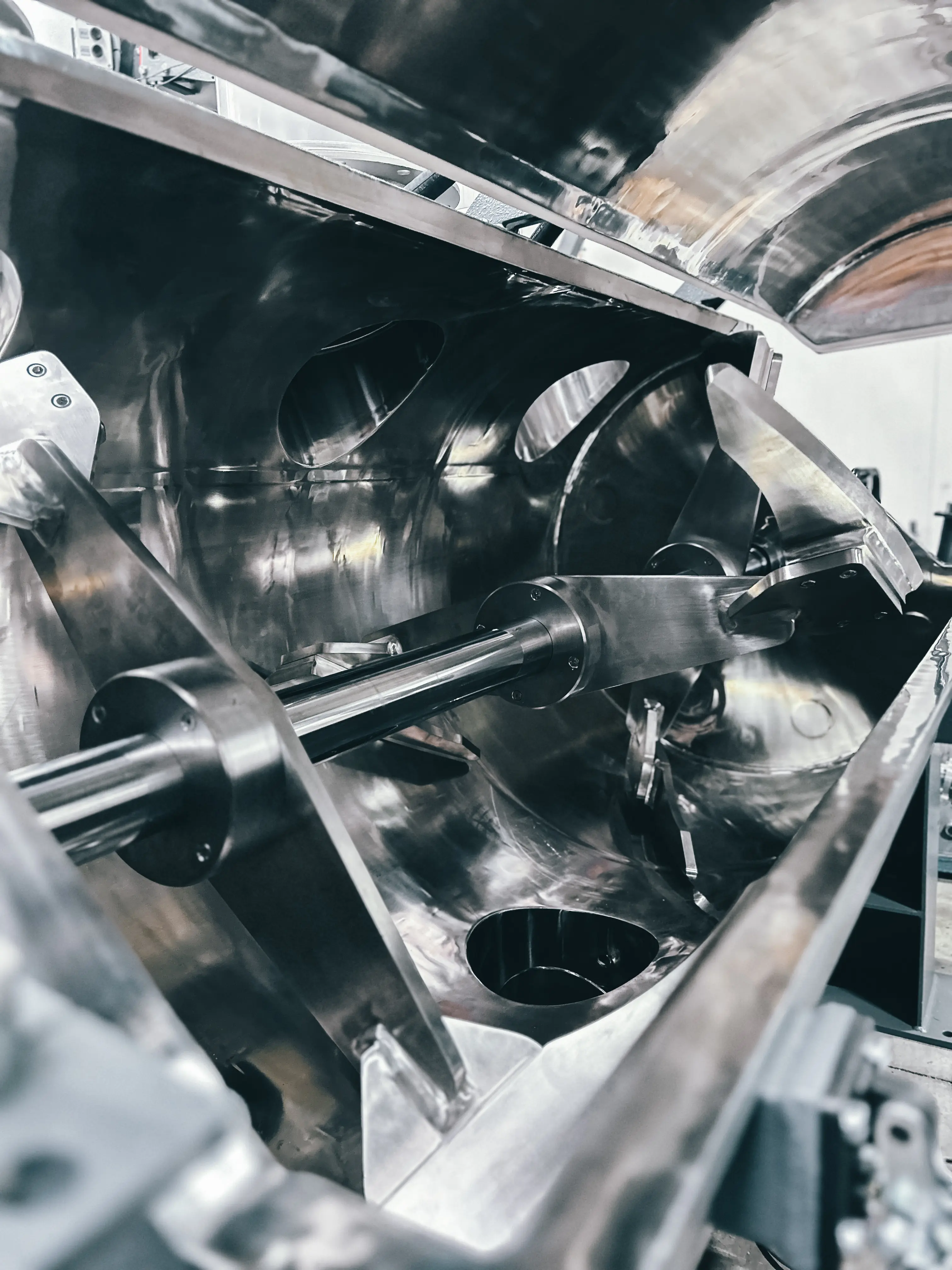
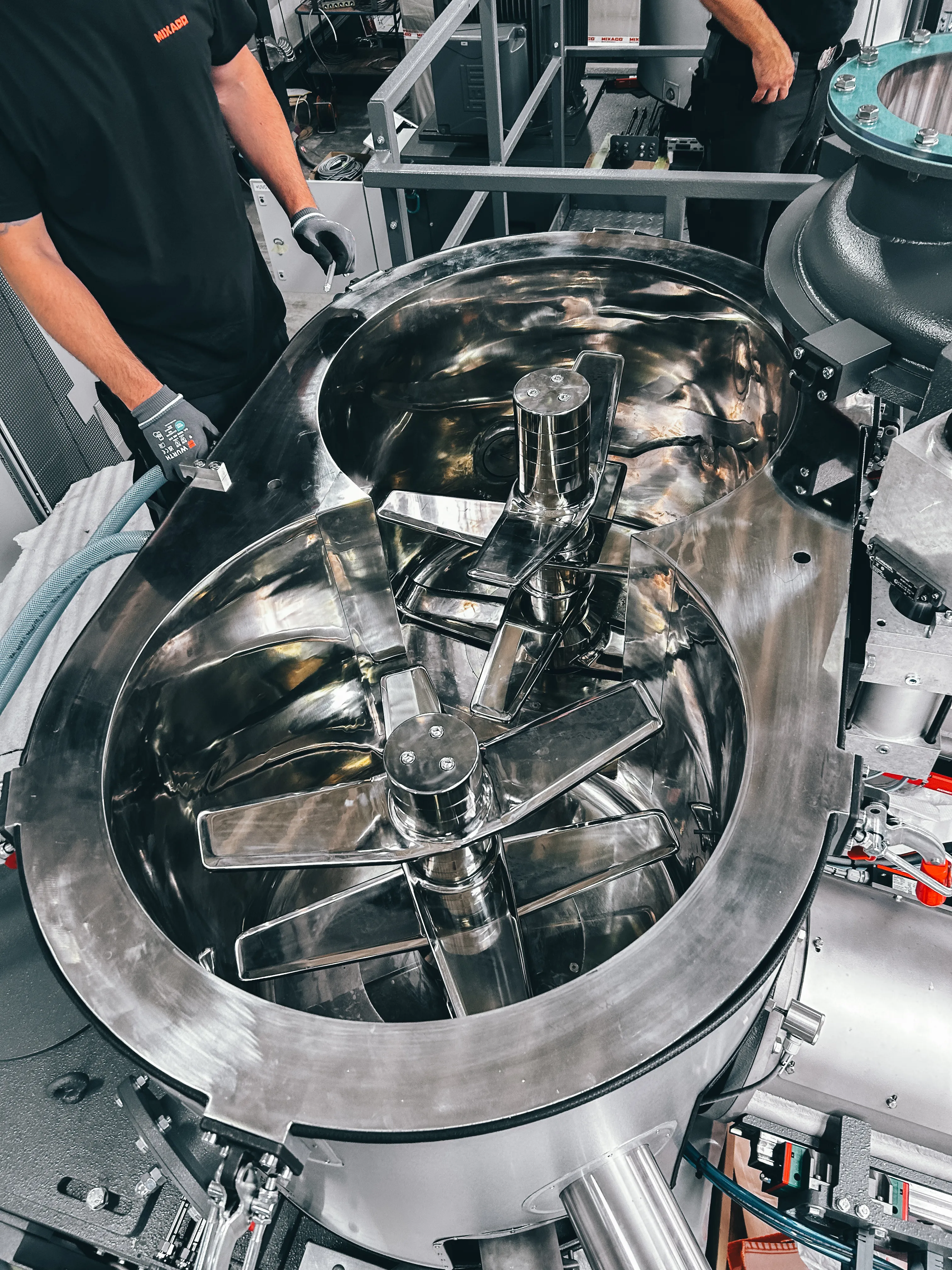
Designed for the Process
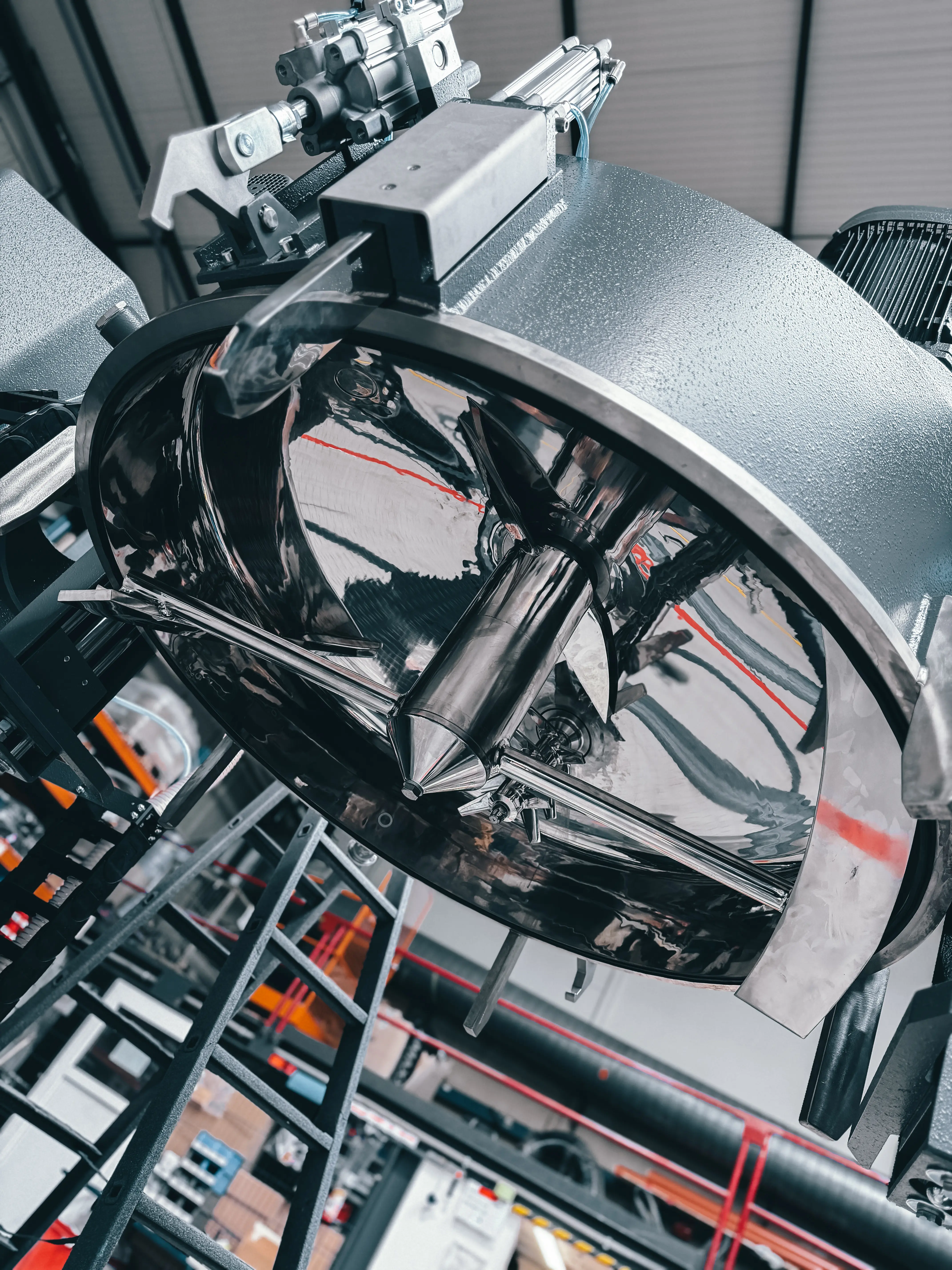
Different materials require different flow patterns and levels of mechanical input. Particle size, bulk density, sensitivity and the desired mixing result all influence which tool configuration delivers the best performance.
That is why MIXACO does not consider the mixing tool independently from the process. Mixer, tool geometry and process parameters are developed as one system.
The result: controlled material movement, efficient energy transfer and reproducible mixing quality tailored to the individual application.
Experience the Difference with Your Own Material
At the MIXACO Test Center, tool configurations are not evaluated by visual observation alone. Process performance can be analyzed through measurable parameters such as mixing time, power consumption, specific energy input, product temperature development, bulk density, particle/agglomerate distribution and batch-to-batch reproducibility.
The objective is not simply to achieve a homogeneous mixture, but to determine the combination of tool geometry and process parameters that delivers the required product quality with the lowest practical mixing time and controlled energy input.
Mixing trials with your own materials are free of charge.
Interested in finding the right tool geometry for your process? Contact us.
Learn more about our productsFor further information please do not hesitate to contact us.
MIXACO
Dr. Herfeld GmbH & Co. KG
Niederheide 2
58809 Neuenrade
Germany
+49 (0)2392 96440
sales@mixaco.de